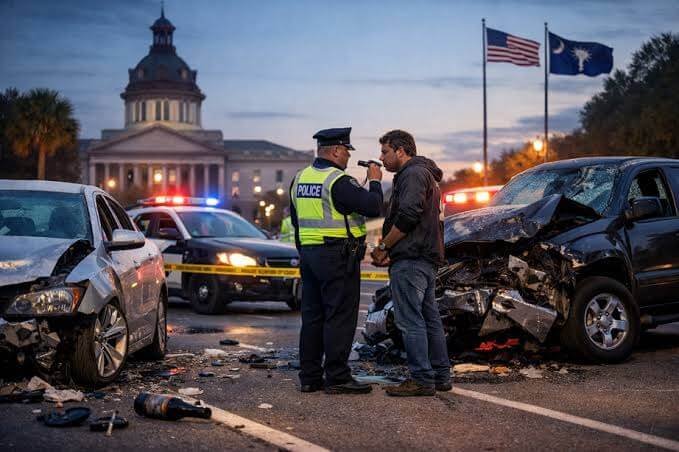
High-speed collisions along busy corridors like I-26, I-85, and I-95 leave drivers dealing with far more than crumpled sheet metal. Within hours of a wreck, commercial insurance adjusters begin calling victims to request recorded statements and push quick, lowball medical releases before the true extent of spinal or orthopedic trauma even shows up on an MRI scan.
Protecting your financial recovery after a serious highway collision requires understanding how state liability rules work in practice. Consulting an experienced Car accident lawyer South Carolina early in the claims process prevents insurance carriers from shifting unfair blame onto injured motorists. Because South Carolina enforces a modified comparative negligence standard—often called the 51 percent bar rule—your compensation is reduced by your assigned percentage of fault, and crossing the 50 percent threshold eliminates your right to recover damages entirely.
Why the FR-10 Form Is Only the Starting Line
At the scene of a crash, responding law enforcement officers issue a green FR-10 insurance verification form alongside their preliminary collision report. While drivers must submit the FR-10 to the Department of Motor Vehicles within fifteen days to confirm active liability coverage, many motorists mistakenly believe the officer’s initial fault notation locks in their civil settlement.
In reality, an FR-10 is not binding evidence in a civil courtroom. Insurance defense teams routinely dispute roadside police conclusions unless those findings are backed up by hard forensic data.
Critical Evidence ThatWins Disputed Liability Claims
- Event Data Recorder (EDR) Downloads: Extracting pre-crash speed, throttle position, and braking timestamps directly from the vehicles’ onboard airbag control modules.
- Intersection & Dashcam Footage: Securing commercial security video and DOT traffic camera feeds before automated 72-hour overwrite loops erase the recording.
- Cell Phone Subpoenas: Obtaining carrier metadata logs to prove the at-fault driver was texting or scrolling through apps at the exact moment of impact.
- Diagnostic Medical Chains: Linking emergency room triage notes directly to follow-up orthopedic and neurological treatment without unexplained gaps in care.
Uncovering Hidden Insurance Policies and UM/UIM Coverage
South Carolina requires drivers to carry minimum liability limits of $25,000 per person and $50,000 per accident. When a multi-vehicle crash requires emergency surgery or weeks of inpatient physical rehabilitation, a bare-bones minimum policy barely covers the ambulance transport and first night in the trauma ward.
Maximizing recovery in catastrophic injury cases involves auditing every available layer of coverage, including Uninsured (UM) and Underinsured Motorist (UIM) policies, resident-relative auto policies, and commercial umbrella endorsements. Working directly with Solomon Law SC ensures that injured passengers and drivers identify all stackable insurance policies while negotiating Down hospital liens to keep more of the final settlement in the victim’s pocket.
See also: How Technology Is Enabling Personalized Learning Experiences
Respecting the Three-Year Filing Deadline
Under South Carolina Code § 15-3-530, injured motorists generally have three years from the date of the collision to file a personal injury lawsuit against a private driver—and only two years if the crash involved a state or municipal government vehicle under the Tort Claims Act. Acting promptly while skid marks, vehicle wreckage, and witness memories are still fresh builds the leverage needed to force fair policy-limit settlements.